

Daily Loss Limits: Balance vs Equity, and How Breaches Really Happen
Two accounts with the same 3% daily limit can breach on completely different days. What decides it is what the limit is measured from, and whether open trades count. Worked examples for each method.
Forexive
· 9 min read

The daily loss limit ends more evaluations than any other rule, and most of the traders it ends never saw it coming. Their closed trades were well inside the limit. Their balance was fine. Then an open position moved against them for twenty minutes, and the account was gone before the stop loss was hit.
The headline number, 3% or 5%, is only part of the rule. What decides when you breach is what the limit is measured from, and whether open trades count. This guide works through each method with numbers, then shows exactly how FOREXIVE calculates it.
Balance and Equity, Precisely
Two words carry the whole subject.
- Balance is your account value from closed trades only. It changes when a position closes.
- Equity is balance plus the profit or loss on every open position. It changes with every tick.
If your balance is $100,000 and you have one open trade showing a $1,500 loss, your equity is $98,500. A rule that checks balance ignores that $1,500 until you close the trade. A rule that checks equity counts it now.
The Four Questions Behind Every Daily Limit
Every daily loss rule answers four questions. Two firms can both advertise "5% daily loss" and answer them differently.
- How big is the allowance? A fixed amount based on the initial balance, or a percentage of the balance at the start of each day?
- Where is the floor measured from? Start-of-day balance, start-of-day equity, or whichever is higher?
- What is checked against the floor? Closed balance only, or live equity at every moment?
- When does the day reset, and on whose clock?
The rest of this guide takes them in turn.
Question 1: Fixed or Relative Allowance
A fixed allowance is calculated once from the initial balance. A $100,000 account with a 3% limit can lose $3,000 a day, whatever its current balance.
A relative allowance is recalculated each day from that day's starting balance.
| Starting balance today | Fixed allowance (3% of $100,000) | Relative allowance (3% of today's balance) |
|---|---|---|
| $110,000 | $3,000 | $3,300 |
| $100,000 | $3,000 | $3,000 |
| $95,000 | $3,000 | $2,850 |
A relative allowance grows when you are winning and shrinks when you are losing, which is exactly when you need room most. A fixed allowance stays the same in both directions.
Questions 2 and 3: Where the Floor Starts and What Is Checked
This is where most of the difference lies. The common methods are:
| Method | Floor measured from | Checked against the floor | Strictness |
|---|---|---|---|
| End-of-day balance | Start-of-day balance | Closed balance at the day's end | Most forgiving |
| Start-of-day balance, live equity | Start-of-day balance | Balance and equity at every moment | Moderate |
| Start-of-day equity, live equity | Start-of-day equity | Balance and equity at every moment | Moderate |
| Higher of balance or equity | Whichever was higher at the reset | Balance and equity at every moment | Strictest |
The first method only looks at closed trades at the end of the day, so intraday swings do not count. It is rare. The other three all watch equity live, so an open loss can breach the account on its own.
The Floating-Loss Trap, With Numbers
A $100,000 1-Step account with a 3% daily limit. The day starts at a balance of $100,000, so the daily floor is $97,000.
| Time | Event | Balance | Open P&L | Equity | Room to floor |
|---|---|---|---|---|---|
| 09:00 | Day starts | $100,000 | — | $100,000 | $3,000 |
| 10:30 | Closed loss | $98,800 | — | $98,800 | $1,800 |
| 13:00 | New trade opened | $98,800 | −$400 | $98,400 | $1,400 |
| 14:45 | Price spikes against the trade | $98,800 | −$1,900 | $96,900 | Breached |
The balance never went below $98,800, and the stop loss was set at −$2,000. It did not matter. Equity touched $96,900, which is below the $97,000 floor, and the account breached at that moment. If price had recovered ten minutes later and the trade had closed in profit, the breach would still stand.
This is the most common way daily limits are broken. The trader counts closed losses and forgets that the open trade's stop distance is also part of the day's risk. The fix is simple: before opening a trade, add its full stop-loss risk to the day's losses so far and check that the total stays inside the allowance.
Overnight Positions: Where the Methods Diverge
The difference between balance-based and equity-based floors only shows up when a position is open across the daily reset. Take the same $100,000 account with a fixed $3,000 allowance. At the reset, the balance is $102,000.
| Position open at the reset | Equity at reset | Floor from start-of-day balance | Floor from start-of-day equity | Floor from the higher of the two |
|---|---|---|---|---|
| Losing $800 | $101,200 | $99,000 (room $2,200) | $98,200 (room $3,000) | $99,000 (room $2,200) |
| Winning $800 | $102,800 | $99,000 (room $3,800) | $99,800 (room $3,000) | $99,800 (room $3,000) |
Read the first row. Under a balance-based floor, a loser carried over midnight eats into the next day's room before the day has started. Under an equity-based floor, the open loss is absorbed into the starting point and you begin with the full $3,000.
The second row reverses it. A balance-based floor gives you extra room on a winner you carry overnight; an equity-based floor does not. The "higher of the two" method takes the less generous answer in both cases.
The practical rule for swing traders: know which method applies, and treat a losing position held over the reset as already part of tomorrow's loss.
Do Not Forget the Maximum Loss Floor
The daily floor is not the only floor. The maximum loss limit sets a second one, and whichever is higher is the one that counts.
A $50,000 1-Step account has a $1,500 daily allowance (3%) and a fixed maximum loss floor of $47,000 (6%). Suppose a day starts at a balance of $48,000.
- Daily floor: $48,000 − $1,500 = $46,500
- Maximum loss floor: $47,000
The maximum loss floor is higher, so your real room today is $1,000, not $1,500. Traders who track only the daily allowance after a losing week often find this out the hard way.
Question 4: The Reset
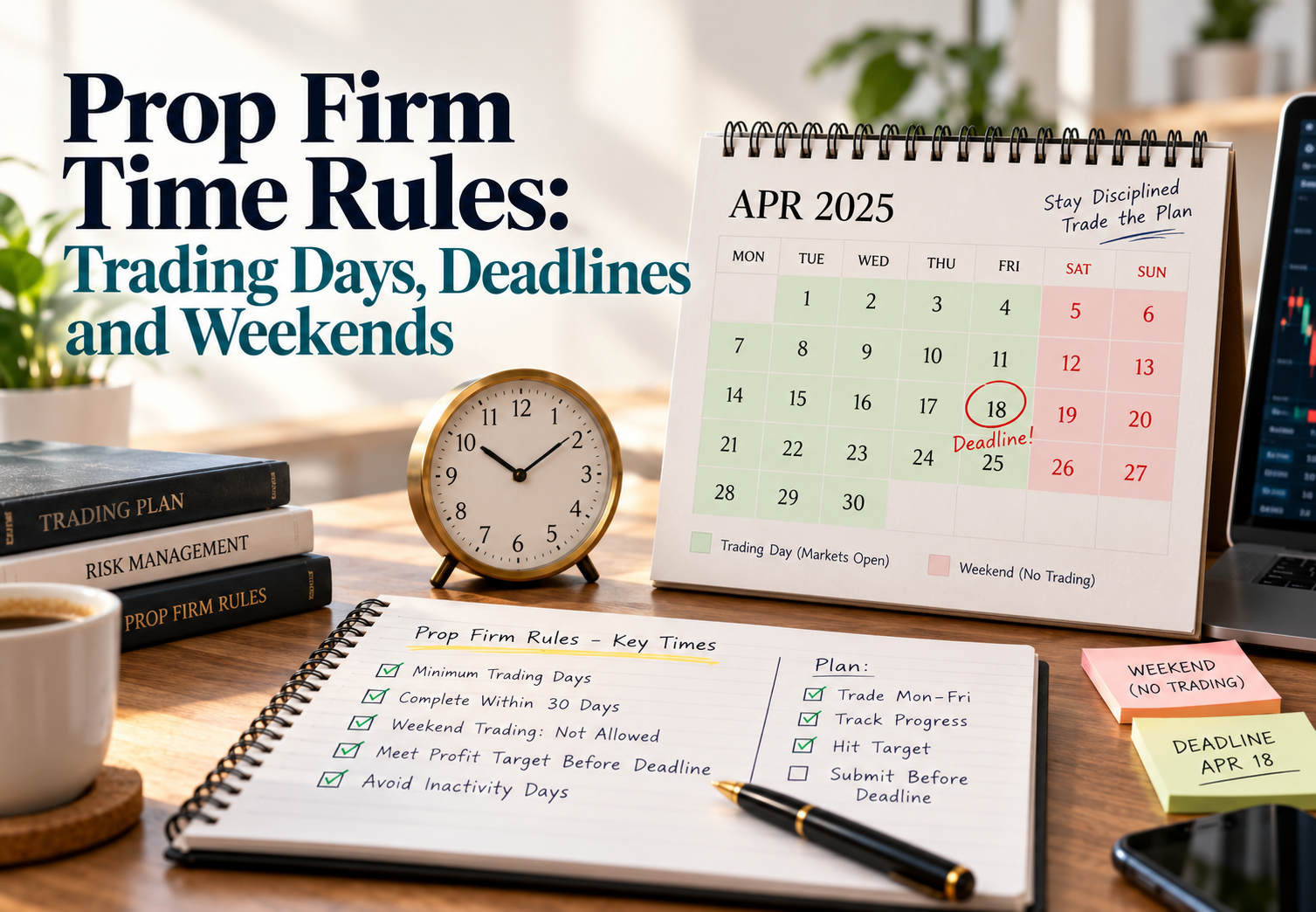
The daily floor resets once a day, at a fixed time on the firm's or broker's clock. That time may be the middle of your afternoon. Find it, convert it to your local time, and write it down. A position opened an hour before the reset and closed an hour after it belongs to two different trading days.
How FOREXIVE Calculates the Daily Loss Limit
Here are FOREXIVE's answers to the four questions, from the help centre:
- Allowance: fixed. It is a percentage of the initial balance and never grows or shrinks with the account: 3% on 1-Step, 5% on 2-Step and 2% on Instant. On Access it is 5% in the evaluation and 3% once funded.
- Floor measured from: the balance at the start of the day. Each day's floor is that balance minus the fixed allowance.
- Checked against the floor: both balance and equity, at any point. If either falls below the day's floor, it is a rule violation, even if the trade later recovers.
- Reset: midnight, broker time.
In the examples above, that is the "start-of-day balance, live equity" method with a fixed allowance. Profit made during the day adds to your room, because the floor stays where it started. Start the day at $100,000 on a 1-Step, bank $1,000, and the floor stays at $97,000, leaving $4,000 for the rest of the day.
Two related rules sit alongside the daily limit:
- Floating risk limit. On 1-Step, 2-Step and Access, open positions must never show an unrealised loss of 3% or more of the balance or equity, even if the daily floor has not been reached.
- Instant per-trade limit. On Instant, no trade may lose more than 1% of the initial balance at any moment.
Six Habits That Keep You Off the Floor
- Track room in equity terms. Room = equity minus the higher of the daily floor and the maximum loss floor.
- Count open risk before you open the trade. Add the new trade's full stop-loss risk to the day's losses.
- Set a personal daily stop at half the limit. On a 3% model, stop trading at −1.5%.
- Never add to a losing position. It is the fastest way to turn floating losses into a breach.
- Treat losers held across the reset as tomorrow's losses. Under a balance-based floor, they already are.
- Know the reset time in your own time zone.
Related Reading
The daily limit works alongside the overall limit, explained in static versus trailing drawdown. To size each trade so it fits inside the day's room, use the position sizing formula, and see prop firm time rules for reset times and trading days. Each FOREXIVE model's limits are listed in full on the rules page.
FAQs
Is the daily loss limit based on balance or equity?
It depends on the firm. At FOREXIVE, the floor is calculated from the balance at the start of the day, and both balance and equity are checked against it at every moment. An open loss can breach the account before the trade is closed.
Can I breach the daily limit with an open trade that later recovers?
Yes, under any method that checks equity. If equity touches the floor, the breach stands even if price recovers afterwards.
Does profit during the day increase my daily allowance?
The allowance itself does not change at FOREXIVE, but profit made during the day adds to your room, because the floor stays at the start-of-day balance minus the allowance.
When does the daily loss limit reset at FOREXIVE?
At midnight, broker time. Convert it to your local time and check whether any positions will be open across it.
What is the difference between the daily loss limit and the maximum loss limit?
The daily limit caps how much you can lose in one trading day. The maximum loss limit caps how far the account can fall in total. Both set a floor, and the higher of the two is the one that applies.
How is the floating risk limit different from the daily loss limit?
The daily limit is measured from the start-of-day balance. The floating risk limit looks only at open positions: on 1-Step, 2-Step and Access, their combined unrealised loss must never reach 3% of the balance or equity.
Trading involves substantial risk of loss. Evaluation and funded accounts described here are simulated trading environments. Figures in this article are illustrative, and the rules page and help centre are authoritative. Nothing on this page is financial advice, and no outcome is guaranteed.
Keep reading
All articles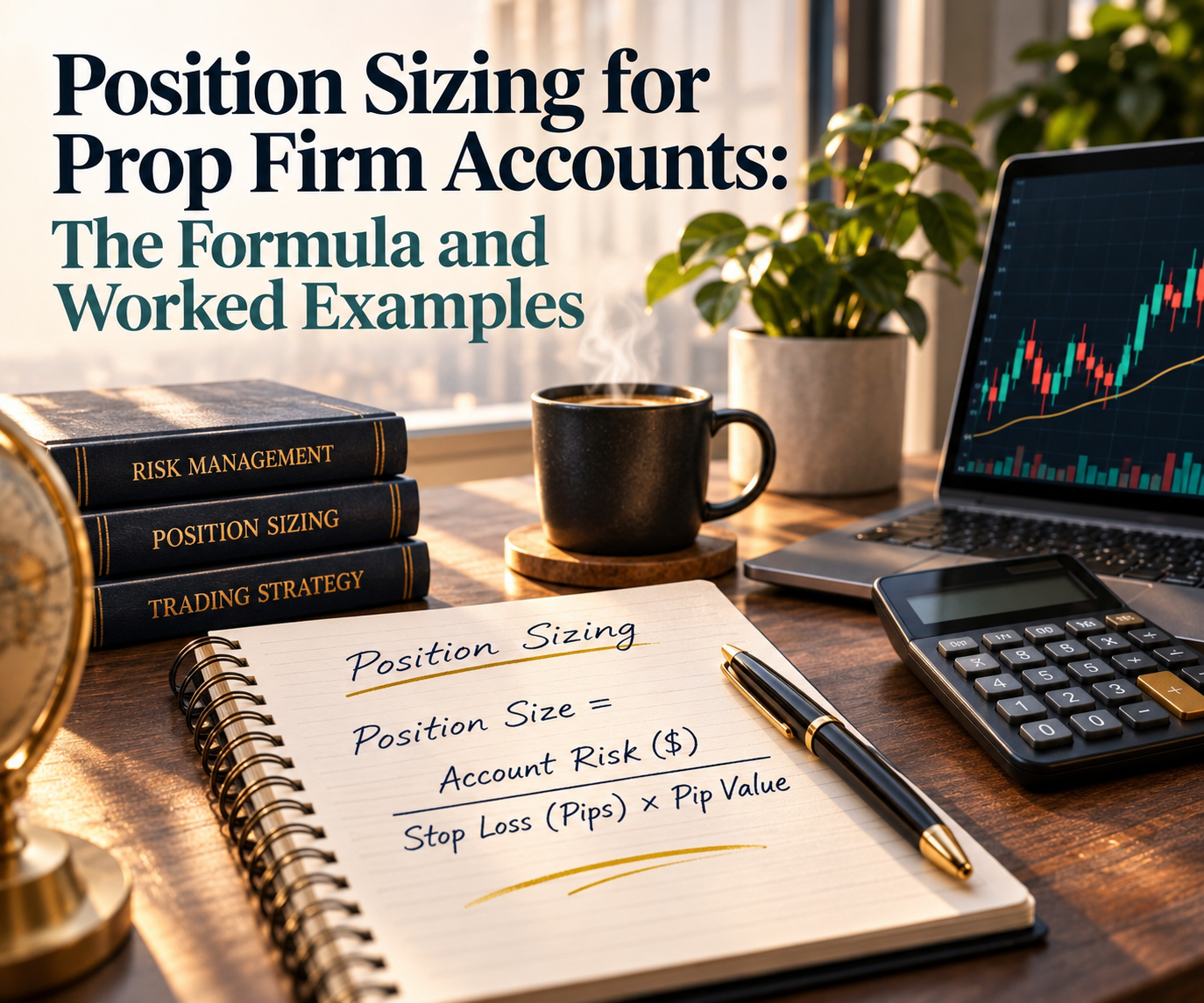

Choose the challenge that fits you
Compare every model and stage, see exactly what you pay and when, and start the challenge that suits how you trade.
FOREXIVE provides demo accounts with fictitious funds for simulated trading only. Rewards depend on performance and the rules of the applicable programme.